
04 — Service
Congress and Conference Systems
Professional conference solutions that integrate discussion, voting, simultaneous interpretation, and recording processes within a single infrastructure.
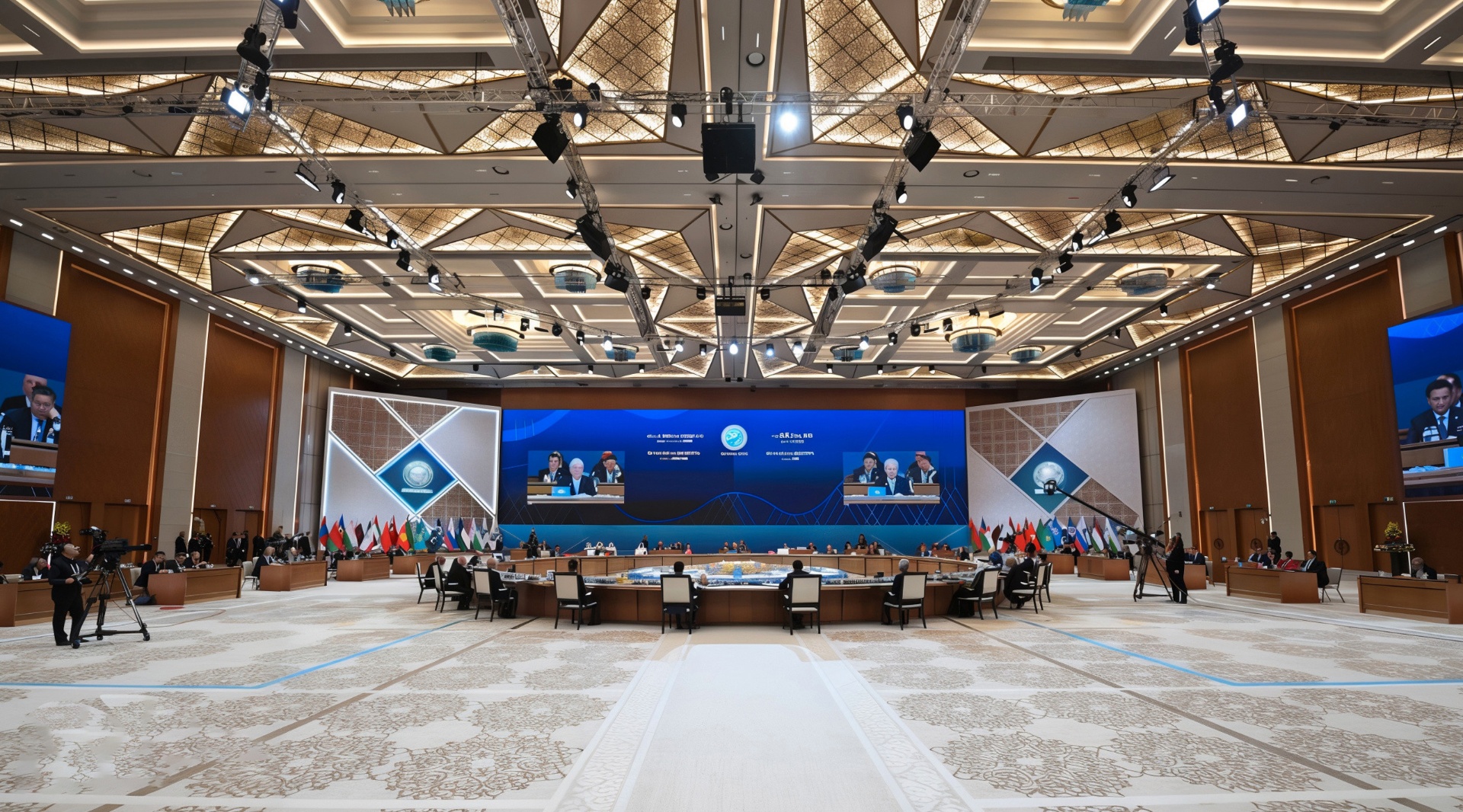
From congress centers and parliamentary chambers to government institutions and international meetings, we design, engineer, and install congress systems for a wide range of applications. Each system is configured according to the venue capacity, seating arrangement, number of participants, language requirements, and existing technical infrastructure.
Professional Congress and Conference Solutions
Professional congress and conference systems consist of much more than microphones that transmit participants’ voices. Speaker management, electronic voting, distribution of simultaneous interpretation across multiple language channels, and meeting recording must all operate seamlessly within the same system.
Depending on the project, we integrate the following solutions within a single infrastructure:
- +Conference microphone systems
- +Chairman and delegate units
- +Electronic voting systems
- +Simultaneous interpretation systems
- +Language distribution infrastructure
- +Conference recording systems
- +Camera, audio, and video integration
Conference Microphone Systems
Conference microphone systems enable participants to speak clearly while ensuring that meetings proceed in a controlled and organized manner. Depending on the venue capacity and intended use, we design both wired and wireless solutions.
Chairman and Delegate Microphone Units
The chairman unit enables meeting management and, when required, provides priority control over speakers. Delegate units allow participants to request the floor, speak, and access other functions connected to the conference system.
Floor Request and Speaker Management
The number of microphones that can be active simultaneously, the order of speaker requests, and speaking durations can all be managed through the central system. This prevents overlapping speakers and helps maintain an orderly meeting environment.
Conference System Installation
Before conference system installation, we assess the venue layout, table configuration, number of participants, and existing technical infrastructure. We determine the required number of microphones, central control architecture, cabling routes, and connections to other systems.
During installation, microphone units, control processors, voting modules, interpretation equipment, and recording infrastructure are configured as an integrated system. The system is then tested on-site, programmed according to user scenarios, and commissioned.
Electronic Voting Systems
Electronic voting systems enable attendance checks and decision-making processes to be conducted quickly, systematically, and with proper records.
Participants can cast their votes through their microphone units or dedicated voting panels. Results can be displayed in real time and recorded according to the defined authorization structure. Open, secret, or name-based voting scenarios can be configured according to project requirements.
Simultaneous Interpretation Systems
Simultaneous interpretation systems transmit the speaker’s audio to interpreters and distribute the interpreted content to participants through different language channels.
We integrate interpreter consoles, audio inputs, language channels, and participant receivers into a unified system. As the number of languages and participants increases, we design an infrastructure that remains reliable, uninterrupted, and easy to manage.
Simultaneous Interpretation Booth Solutions
A simultaneous interpretation booth provides interpreters with a comfortable and technically suitable working environment that is isolated from external noise as much as possible.
When planning booth placement, stage visibility, access to displays, ventilation, sound insulation, and cable connections must all be considered together. We design ergonomic working environments that allow interpreters to clearly follow both the speaker and presentation content.
ISO 4043 Interpretation Booth
An ISO 4043 interpretation booth is designed to meet the acoustic and physical requirements applicable to portable simultaneous interpretation booths.
The primary criteria considered in these solutions include:
- +Acoustic isolation from external noise
- +Adequate workspace for interpreters
- +Clear sightlines to the stage and displays
- +Sufficient ventilation
- +Safe entry and exit
- +Technical equipment connections
We plan booth locations so that they do not interfere with the venue layout or obstruct audience sightlines.
Conference Recording Systems
Conference recording systems enable meeting audio and, where required, speaker, voting, and language-channel information to be archived.
Depending on the project, the recording architecture can be configured around a single main audio channel or multiple individual speaker and language channels. Recordings can subsequently be used for archiving, reporting, broadcasting, or corporate documentation purposes.
How Are Congress Systems Integrated?
We integrate microphone, electronic voting, simultaneous interpretation, camera, audio, video, and recording components under a unified control architecture.
Functions such as automatically selecting the camera corresponding to the active speaker, routing video to in-room displays, displaying voting results, and starting meeting recordings can all be managed through a single system.
Where Are Professional Conference Systems Used?
Professional conference systems can be used in:
- +Congress and conference centers
- +Parliamentary and municipal chambers
- +Government institutions
- +Universities
- +Hotels and meeting venues
- +Corporate boardrooms and executive spaces
- +International organizations and events
For each application, we develop a system architecture tailored to participant capacity, meeting format, and security requirements.
How Are Congress and Conference Systems Designed?
During the system design process, we analyze venue capacity, seating configuration, number of microphones, required number of languages, electronic voting requirements, recording infrastructure, and existing AV systems.
Based on this information, we plan equipment locations, cabling architecture, the central control system, interpretation booths, and system integration scenarios.
Conference System Installation Process
We carry out the process through a controlled sequence of stages:
- 01Site survey and requirements analysis
- 02Venue layout assessment
- 03Microphone and control system design
- 04Voting and interpretation infrastructure planning
- 05Simultaneous interpretation booth positioning
- 06Cabling and installation
- 07Integration and programming
- 08Testing, training, and handover
Why Use a Professional Conference System?
Incorrectly designed systems can lead to audio interruptions, speaker management issues, voting errors, and inadequate interpretation quality. Recording and integration problems can also compromise meeting reliability and negatively affect institutional archiving processes.
Professional system design ensures that all components operate together reliably, consistently, and repeatably.
Congress System Solutions for Your Project
We assess your venue capacity, microphone requirements, number of languages, voting requirements, and recording needs together. We manage the design, installation, integration, testing, and user training processes within a single coordinated structure.