
05 — Service
Broadcast and Recording Systems
Professional broadcast infrastructures designed to capture video, process audio, record content, and reliably distribute it across multiple channels.
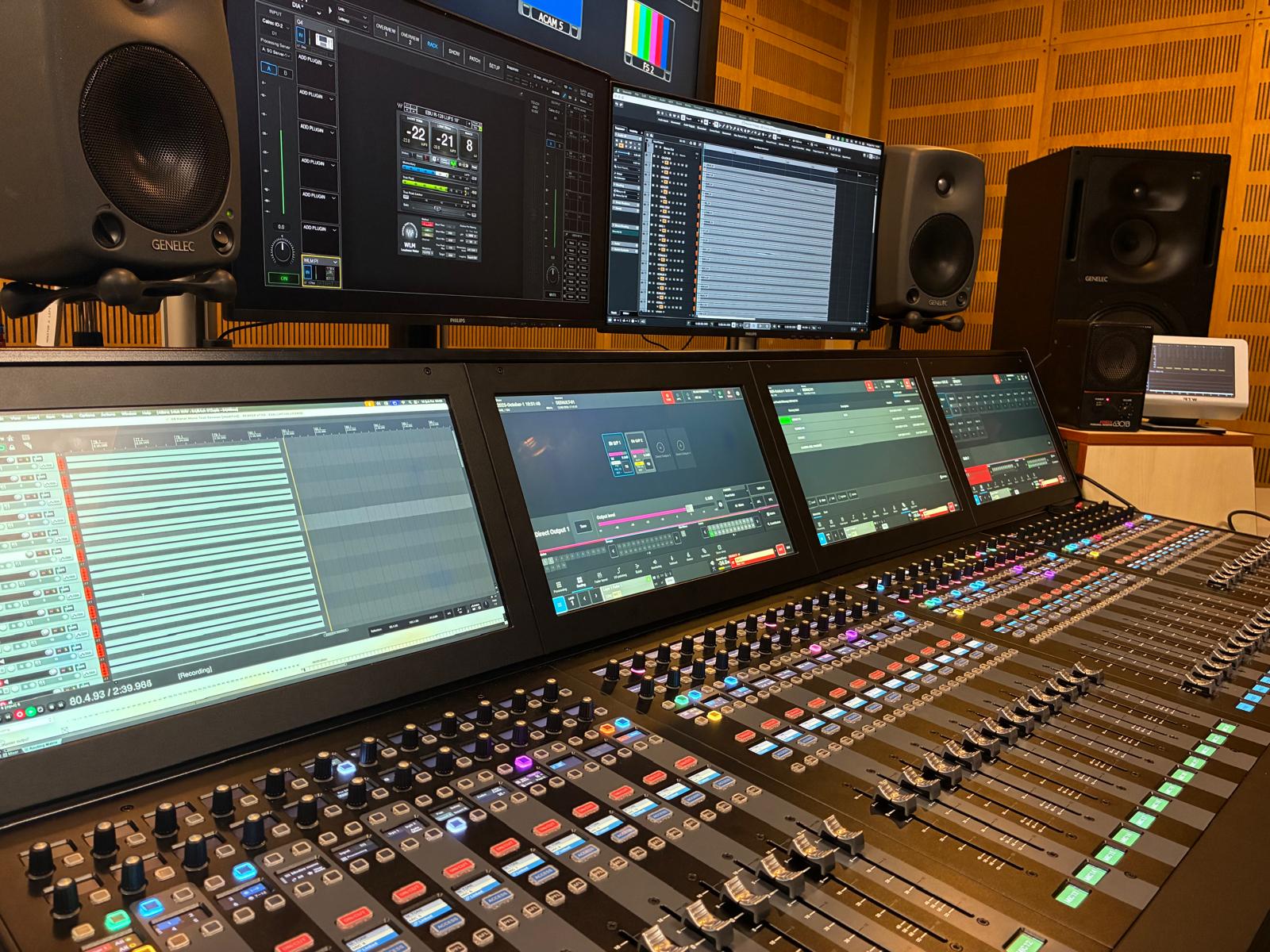
From television and radio studios to corporate broadcast centers, podcast studios, and live event productions, we design, engineer, and install broadcast and recording systems for a wide range of requirements. Each system is configured according to content type, broadcast workflow, number of camera and audio channels, recording capacity, and distribution requirements.
Professional Broadcast and Production Solutions
Professional broadcast and production infrastructure consists of much more than cameras, microphones, and recording devices. Video, audio, control, recording, monitoring, and distribution processes must work seamlessly within a unified workflow.
Depending on the project, we integrate the following solutions within a common system:
- +Camera and video management
- +Audio production and mixing systems
- +Production control room infrastructure
- +Professional recording systems
- +Live broadcast and distribution solutions
- +Monitoring, intercom, and centralized control
Professional Broadcast Systems
Professional broadcast systems cover the complete process from acquiring audio and video sources to delivering content to the audience.
We process signals from cameras and microphones, route them through the production control environment, and distribute content to recording, live broadcast, or corporate distribution channels. We design the system architecture with daily operating demands, broadcast continuity, and future capacity expansion in mind.
Professional Recording Systems
Professional recording systems enable video and audio to be recorded in the correct formats, without interruption, and in a form suitable for archiving.
Depending on single- or multi-channel recording requirements, the program output, clean camera feeds, isolated audio channels, and different content sources can be recorded simultaneously. We configure the recording infrastructure according to storage capacity, file format, backup, and archiving requirements.
Broadcast Systems
Broadcast systems integrate all technical components of a professional broadcast workflow within a unified infrastructure.
We design camera systems, digital audio mixers, video switchers, graphics infrastructure, intercom, monitoring, recording, and broadcast outputs as a complete system. We ensure that the entire infrastructure operates with low latency, remains synchronized, and can be managed efficiently by operators.
Broadcast Studio Systems
Broadcast studio systems require the production area, control room, and technical spaces to be planned together.
Studio Camera Systems
We determine the number of cameras, shooting angles, lens requirements, and movement areas according to the content being produced. Camera control, signal transmission, and image matching are managed centrally.
Production Control Room Systems
We design the production control room as the central hub for video switching, audio mixing, graphics, recording, and broadcast distribution. Equipment placement is planned around operator accessibility and workflow efficiency.
Audio and Video Monitoring
We implement professional monitoring solutions that enable video feeds, audio channels, and broadcast outputs to be monitored in real time.
Studio Installation Systems
Studio installation systems require the space to be evaluated not only in terms of equipment, but also acoustics, electrical infrastructure, data, cabling, and workflow.
Before implementation, we plan signal flow between the studio and control room, power distribution, equipment locations, and cable routes. This ensures the system operates on an organized, safe, and maintainable technical infrastructure.
Audio Recording Studio Installation
Audio recording studio installation involves the integrated acoustic and technical design of both the recording area and control room.
Acoustic Treatment and Sound Isolation
We develop solutions to reduce external noise and uncontrolled reflections within the room. Acoustic treatment is planned according to the type of recording and the characteristics of the space.
Microphone and Recording Signal Chain
We configure the signal chain—including microphones, preamplifiers, digital mixers, converters, and recording software—according to the intended application.
Control Room and Monitoring
We design monitor placement, listening positions, and control surfaces to create a balanced working environment that enables accurate evaluation and decision-making.
Live Broadcast Systems
Live broadcast systems enable audio and video to be processed in real time and reliably delivered to selected platforms.
We integrate multi-camera video production, audio mixing, graphics, recording, encoding, and broadcast distribution within a single workflow. For broadcasts delivered over the internet or corporate networks, we evaluate connection capacity, redundancy, and broadcast continuity together.
Camera and Video Routing Systems
We select, process, and route different camera and video sources through the production control environment to the required destinations.
The program feed can be distributed simultaneously to in-room displays, recording systems, live broadcast outputs, or different control points. We design the video routing architecture according to resolution, latency, and signal format requirements.
Audio Production and Recording Chain
Within the audio production chain, we manage signals from microphones through digital mixing, signal processing, recording, and monitoring components.
Through correct gain structure, channel routing, and recording levels, we create a clean, balanced audio infrastructure suitable for professional broadcast standards.
Where Are Broadcast and Recording Systems Used?
Professional broadcast and recording solutions can be used in:
- +Television and radio studios
- +Podcast and audio recording studios
- +Corporate broadcast centers
- +Educational and content production studios
- +Production control and operations rooms
- +Live event production environments
How Is a Broadcast Studio Designed?
During the engineering process, we analyze the content type, number of cameras, audio channels, recording capacity, live broadcast requirements, and control room architecture.
Based on this information, we plan equipment placement, audio and video signal flow, monitoring, cabling, recording, and distribution systems.
Broadcast and Recording System Installation Process
We carry out the process through controlled stages:
- 01Site survey and requirements analysis
- 02Definition of the broadcast workflow
- 03Studio and control room design
- 04Audio and video infrastructure engineering
- 05Cabling and equipment installation
- 06System integration
- 07Testing and commissioning
- 08Operator training and handover
Why Use a Professional Broadcast System?
Signal loss, audio/video synchronization problems, recording interruptions, and inadequate monitoring can directly affect broadcast quality. Complex and poorly planned systems can also lead to operator errors and disruptions in broadcast continuity.
Professional system design ensures that all components operate together reliably, consistently, and repeatably.
Broadcast and Recording Solutions for Your Project
We evaluate the studio type, content to be produced, number of camera and audio channels, recording capacity, and live broadcast requirements together.